A garden balcony overlooking the port
Miramar viewpoint
The Miramar viewpoint opens up Barcelona and its harbour from the slopes of Montjuïc. Gardens, open terraces and promenades let you enjoy the landscape without climbing all the way to the castle. It combines naturally with a mountain walk, a visit to the nearby cactus gardens or an aerial journey across the port towards the Barceloneta waterfront.
Plan your visit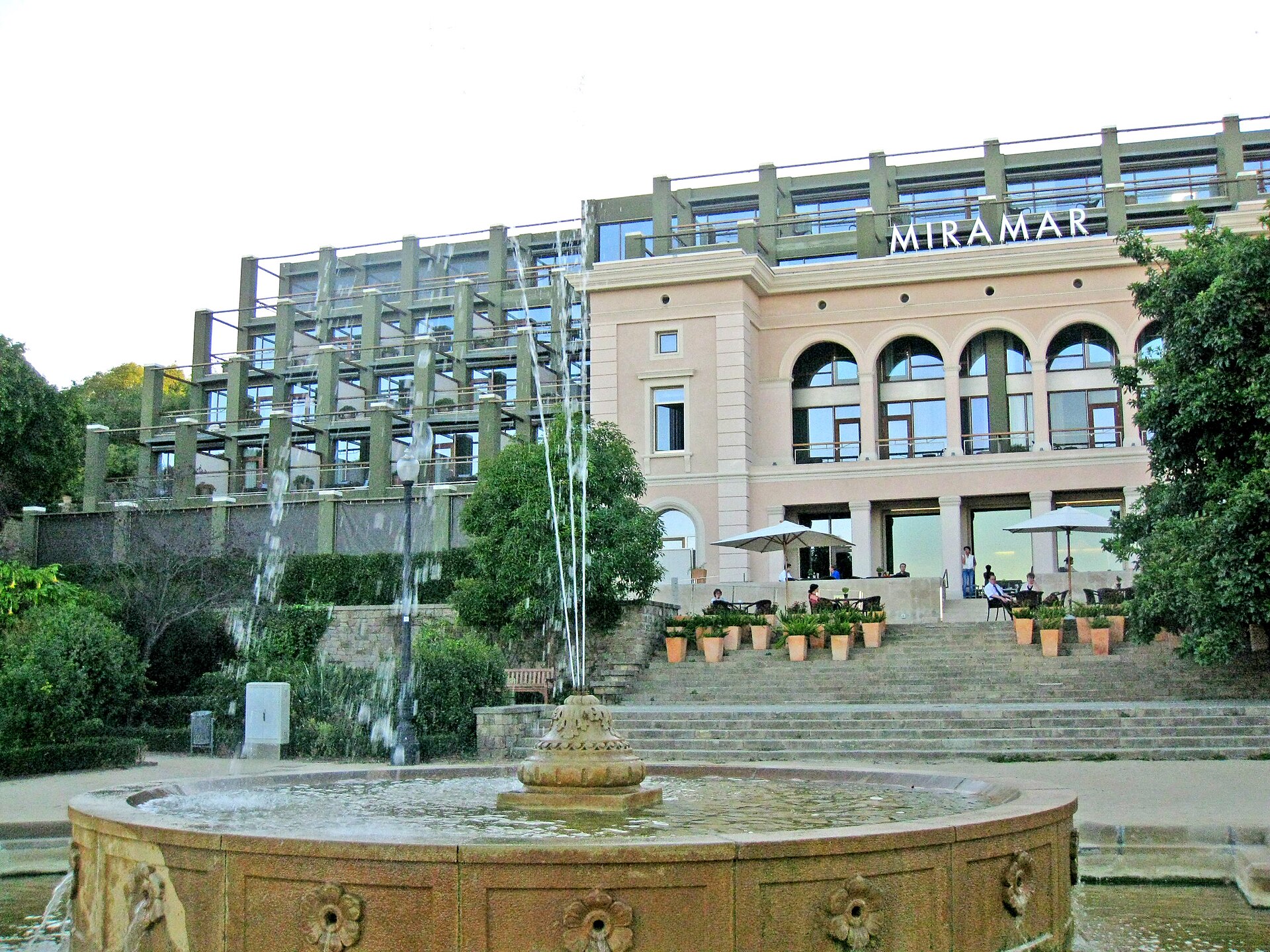
01 · Before you begin
What to discover at the Miramar viewpoint
Here, the panorama shares attention with a historic garden of flowerbeds, trees and sculptures. The public space sits beside the Miramar hotel building, within a landscape reshaped for the 1929 International Exhibition. Explore the open terrace and its edges slowly: changing your position helps reveal how the city, the harbour and the mountain relate to one another.
How to reach the Miramar viewpoint
Use the Jardins de Miramar and their surroundings as your destination, rather than searching only for a cable car station. The port cable car has one terminus here and connects with Barceloneta. It is a different service from the cabins travelling towards the castle, an important distinction when choosing tickets and planning the rest of your visit.
- Area
- The maritime side of Montjuïc
- Garden reference
- Carretera de Miramar, 29
- Landscape
- Harbour, coast and city
- Port cabins
- Connection with Torre de San Sebastián in Barceloneta
- Access detail
- The hillside station has steps down to its platform
Gardens that reveal another chapter of Barcelona
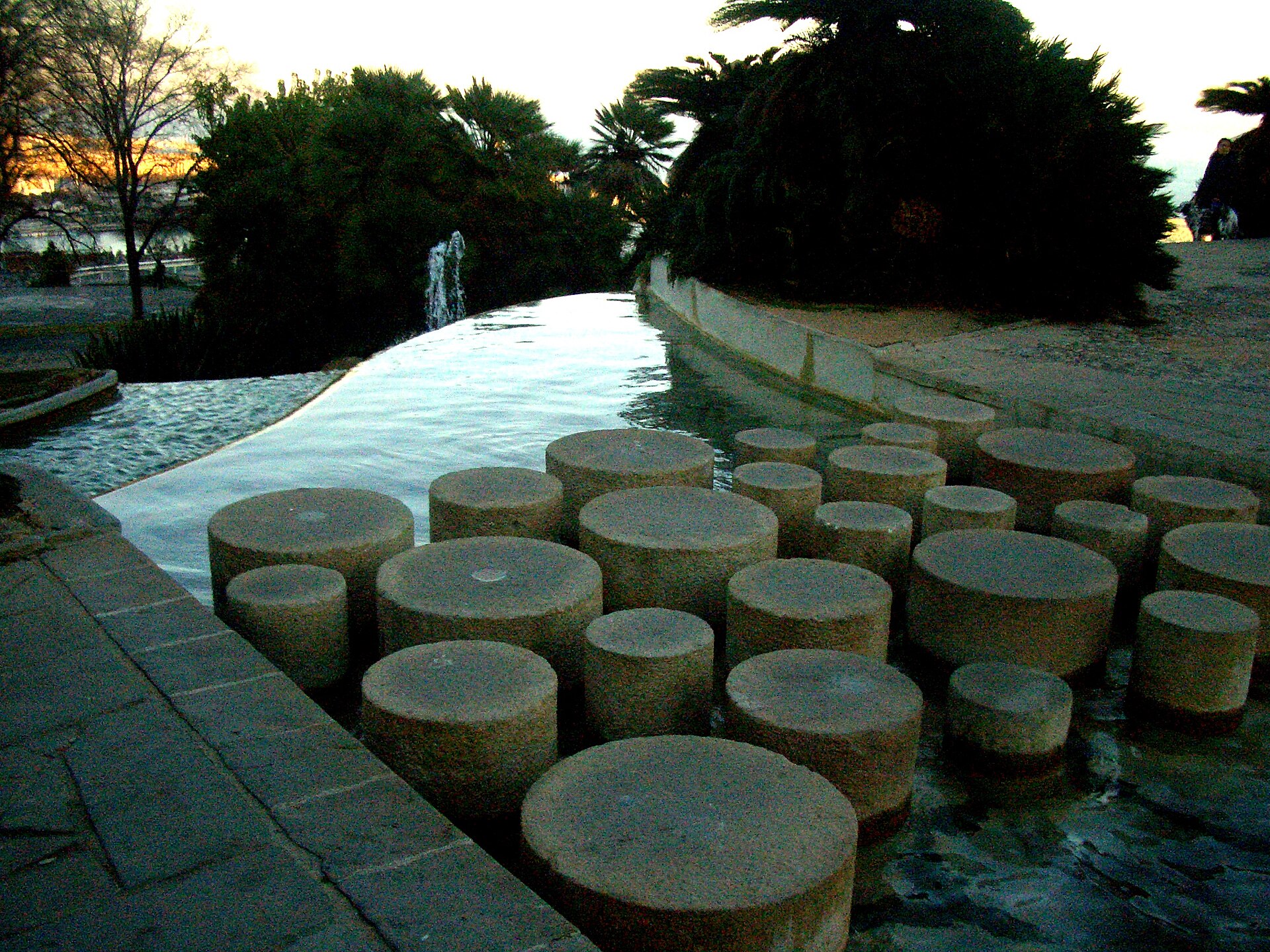
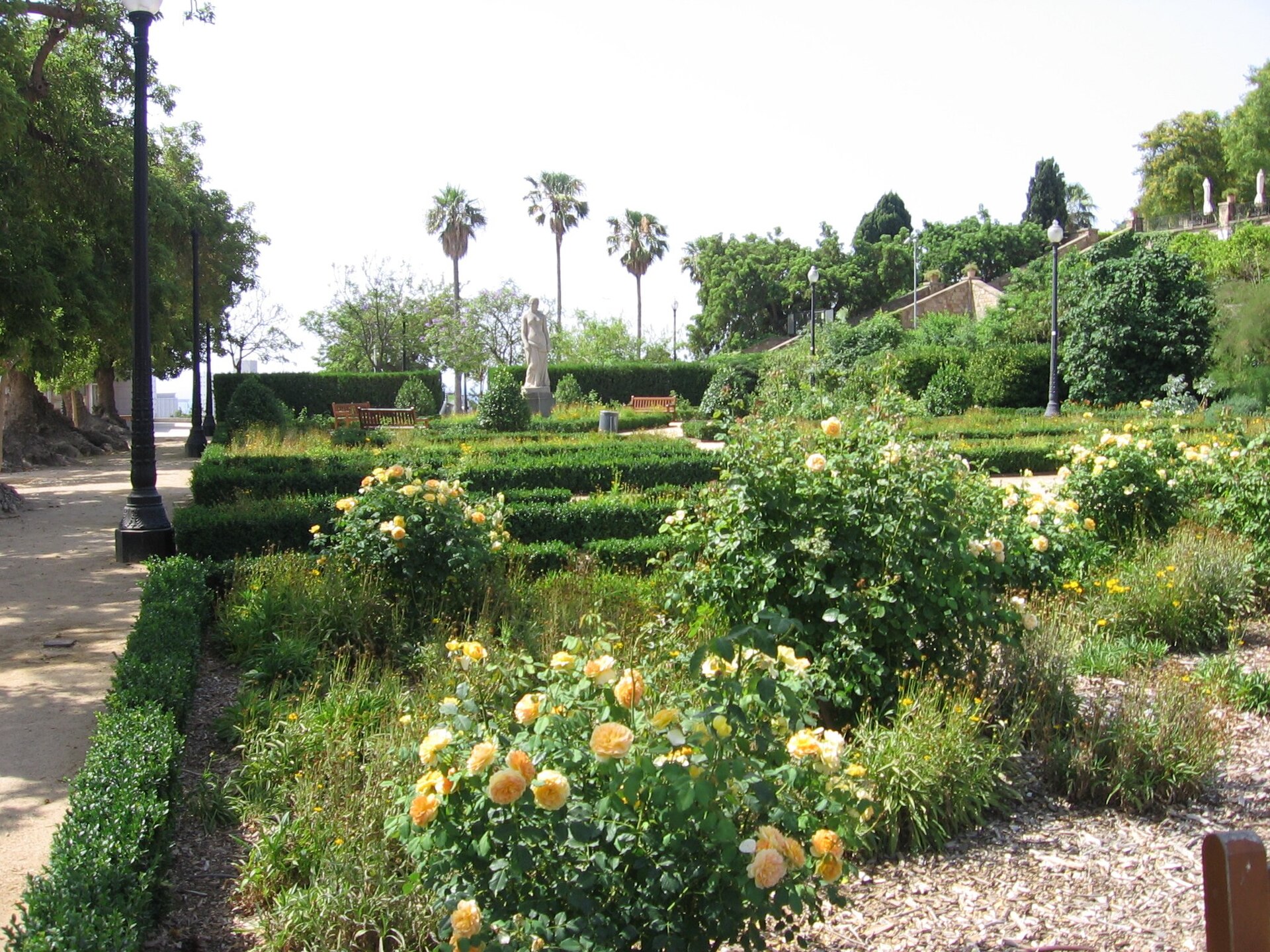
Created between 1919 and 1923, the gardens were designed by Jean-Claude Nicolas Forestier and Nicolau Maria Rubió i Tudurí. Spend a little time looking at the edges of the flowerbeds and the relationship between the central fountain and the paths, as well as the maritime horizon beyond them.
The building behind the gardens has also changed purpose over time. It began as an exhibition restaurant, later housed the headquarters of Spanish television in Catalonia, and eventually became a hotel. This background gives the walk another layer and shows how the mountain brings together projects from different periods. The hotel’s facilities and the public spaces have their own separate conditions of use.
Works by Josep Clarà and Pablo Gargallo are among the garden’s sculptures. Include them in a small observation walk that moves between planting, architecture and art. Looking at details before returning to the panorama makes the visit rewarding even when haze reduces distant visibility.
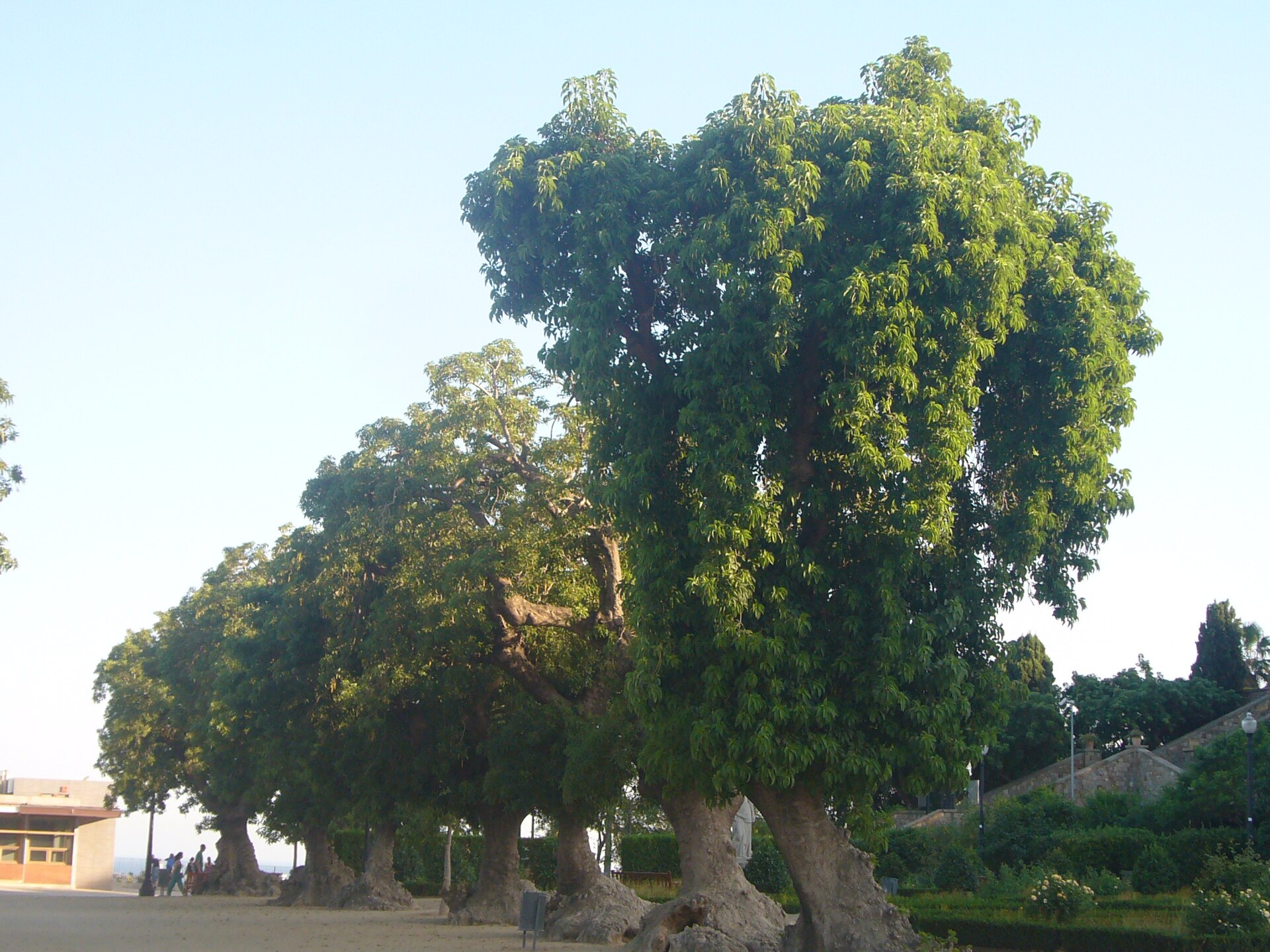
The promenade of ombú trees provides another distinctive feature nearby. Their trunks and unusual forms invite close observation, including how their shade differs from that of neighbouring trees. Keep to the designated paths and avoid climbing roots or sculptures to improve a photograph.
Taking time over the maritime landscape
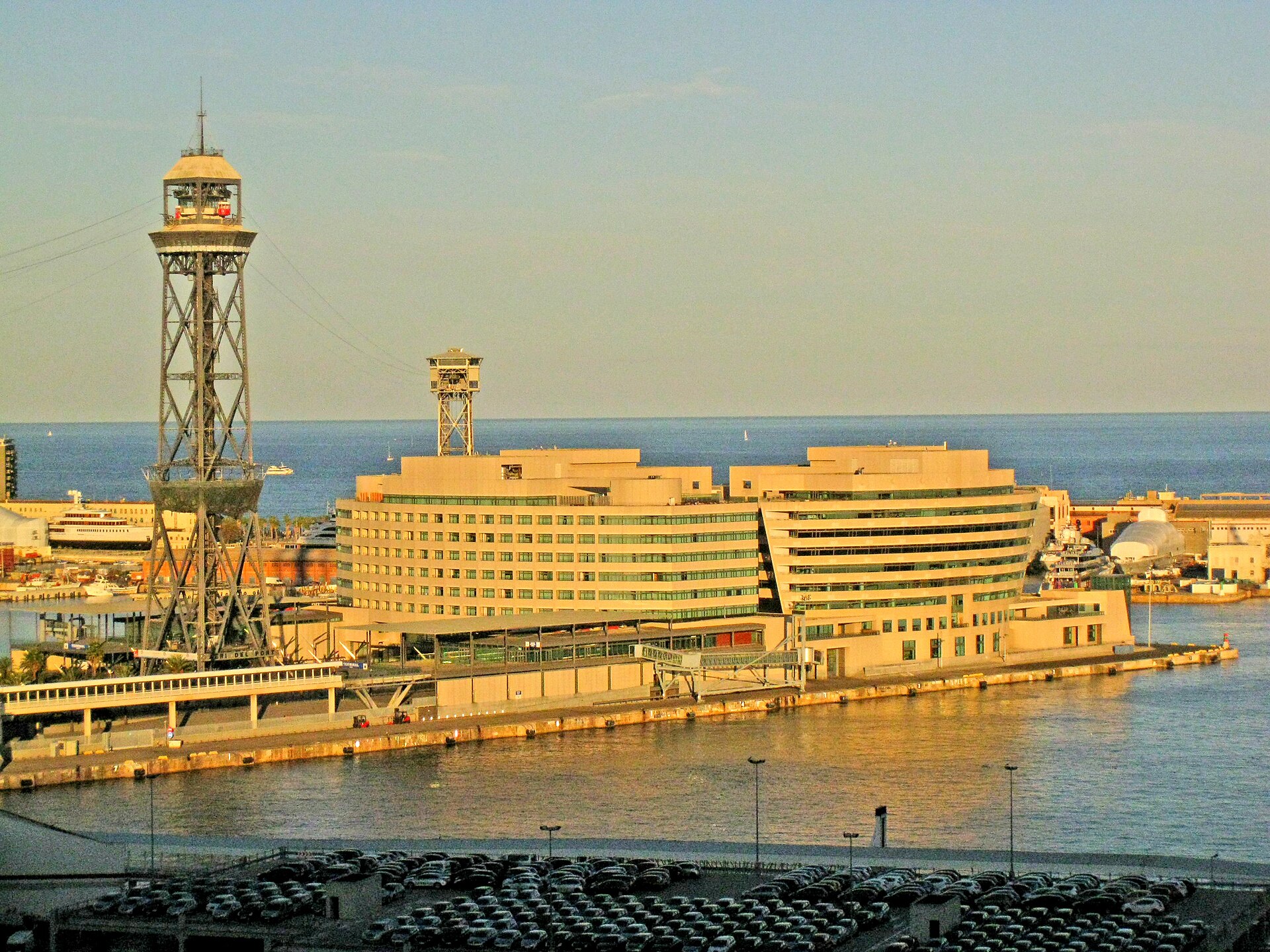
The harbour tells a different story of Barcelona from the streets of the historic centre. Basins, quays and vessels reveal the scale of its waterfront. Try distinguishing leisure areas from working port spaces, then notice how routes across land and water organise this part of the city. A few minutes of observation can make the panorama easier to understand.
For photographs, begin with a broad view and then select one detail. An alignment of trees or an edge of the garden can add depth without hiding the horizon. When other visitors are enjoying the same space, look for another angle and keep the path clear.
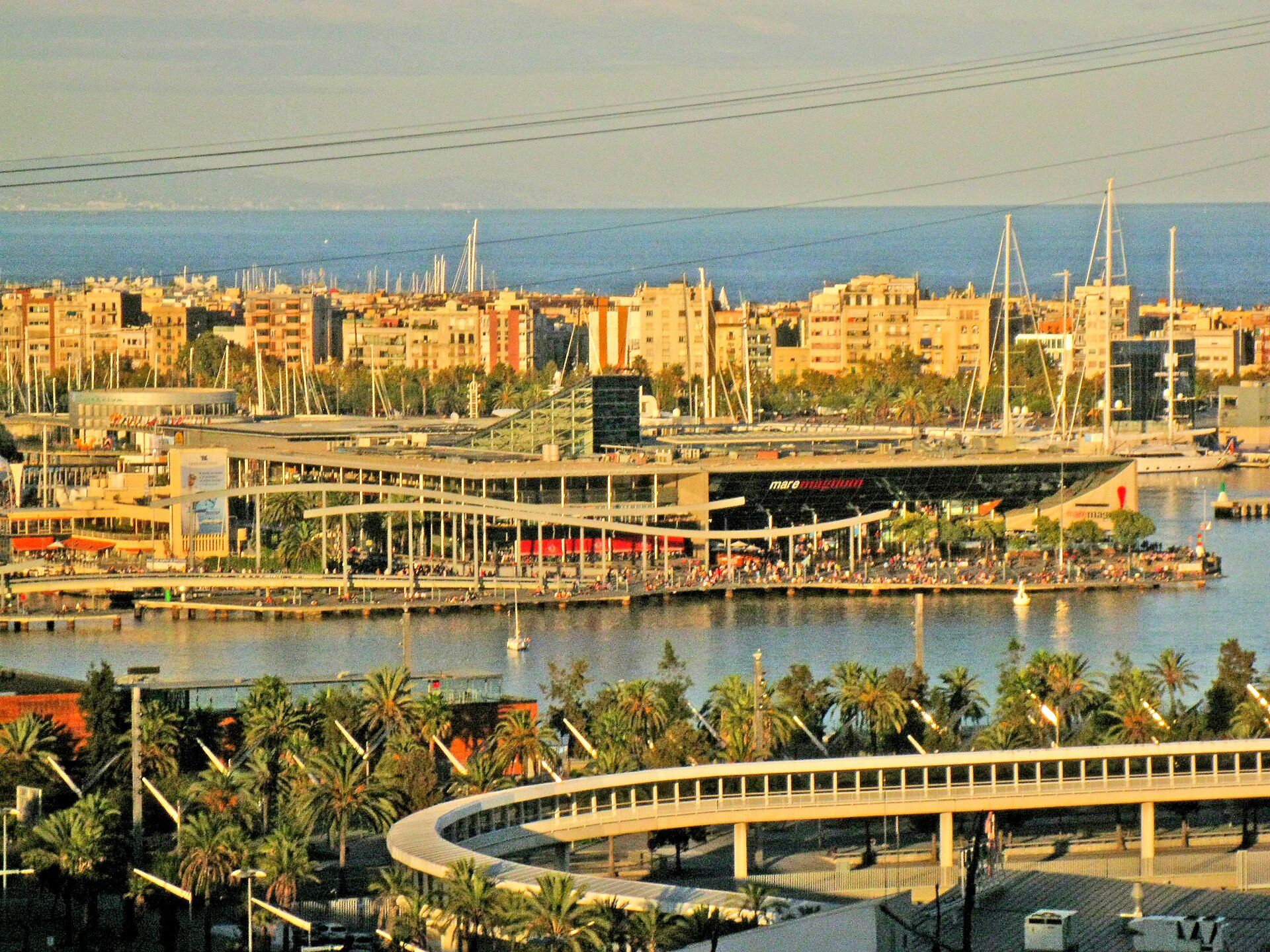
No single hour guarantees the best view. Sunlight, clouds, humidity and wind change the scene throughout the year. If distant buildings are your priority, clarity matters more than a simple sunrise or sunset label. For an enjoyable walk, choose a period that combines comfortable temperatures with enough time for the return journey and any other stops you have planned.
With children, you might look for different kinds of boats or identify where the streets end and the water begins. Visitors who prefer a quieter outing can focus on the garden and one panoramic stop. Bring water and arrange breaks around the group’s actual needs. Walking on an urban mountain still involves slopes and movement between separate places, even when everything appears nearby on a map.
Choosing the right cable car and onward walk
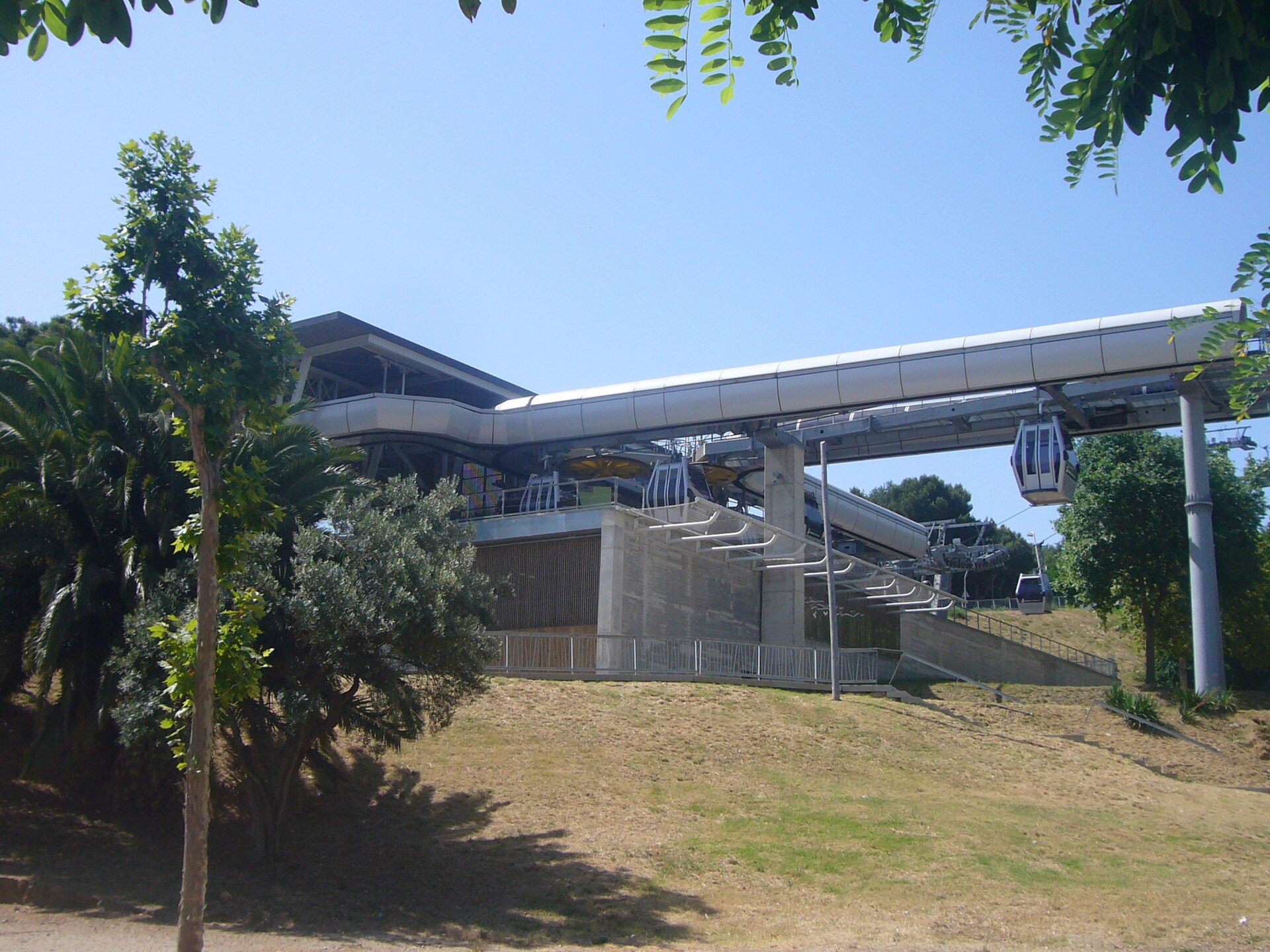
The port cabins link the station on this hillside with Torre de San Sebastián in Barceloneta. Torre de Jaime I is not an access point. This journey crosses the harbour area and does not continue to the castle. Check the departure station on your ticket before setting out, especially if you have booked several activities in different parts of Barcelona that day.
The operator states that there are stairs down to the platform at the hillside station. If you need to avoid steps, ask directly about boarding and arrival arrangements before buying. Visiting the garden and riding the cabins are separate choices. A walk through the public spaces can still work well when the aerial journey does not suit your group’s preferences or requirements.
For an onward walk, the Mossèn Costa i Llobera gardens provide a contrasting collection of cacti and other plants adapted to dry conditions. Check current entrances and opening information before including them. If you prefer to continue uphill, the Alcalde gardens offer terraces and an artistic pavement, giving the next stop a different character from this open maritime garden.
The Red Route of Barcelona Bus Turístic has a Miramar–Jardins Costa i Llobera stop, useful if you are already using that service. Another option is to plan a walking route towards Poble-sec, allowing for the slope. Decide where you want the outing to finish and check transport from there. That small decision helps avoid repeated climbs and gives the whole itinerary a clearer direction.
Sources and visitor information
Check the official conditions and notices before booking or travelling.
Photograph authors and licences
- The fountain and the Miramar building. · Hotel Miramar (Barcelona), 4.jpg · Enfo · Original source · CC BY-SA 3.0.
- A walk through the Miramar gardens. · Jardins Miramar2.jpg · Canaan · Original source · CC BY-SA 3.0.
- The harbour cable car towers and the World Trade Center. · 31 World Trade Center i torres del telefèric.jpg · Enfo · Original source · CC BY-SA 3.0.
- Port Vell and Barceloneta from the terrace. · Maremàgnum i Barceloneta.jpg · Enfo · Original source · CC BY-SA 3.0.
- The ombú trees in the Miramar gardens. · Bellaombres (Phytolacca dioica) - Jardins de Miramar.JPG · Jordiferrer · Original source · CC BY-SA 3.0.
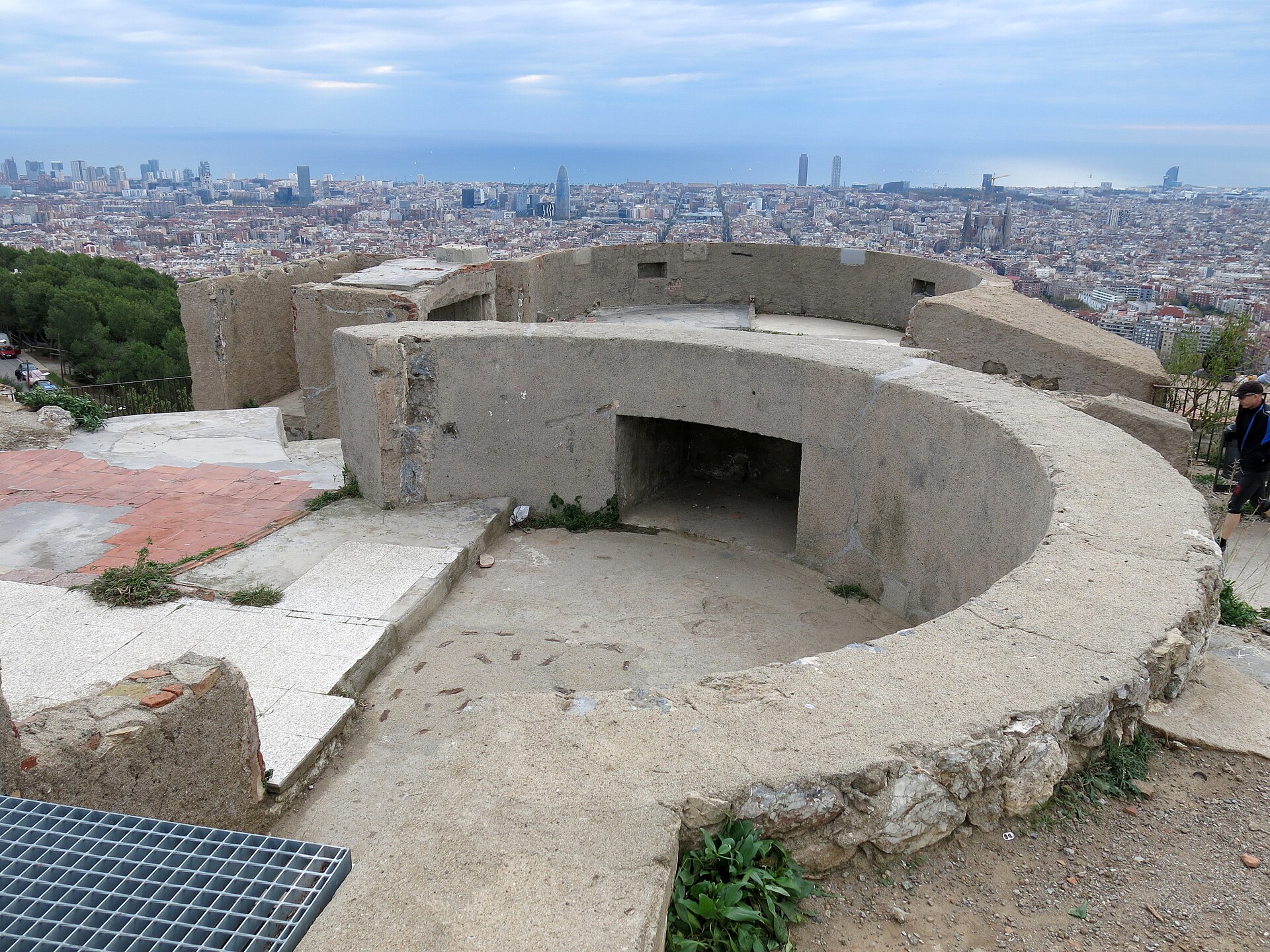
- Remains of the former anti-aircraft battery. · 049 Turó de la Rovira, antiga bateria antiaèria.jpg · Enric · Original source · CC BY-SA 4.0.
- The terrace at the Mayor’s Lookout. · Mirador de l'Alcalde Parc de Montjuïc.JPG · Invivi · Original source · CC BY-SA 3.0.
- Mirador station on the Montjuïc cable car. · Estació El Mirador del Telefèric de Montjuïc.JPG · Jordiferrer · Original source · CC BY-SA 3.0.


Images are resized and cropped for this page. Adaptations of CC BY-SA photographs are shared under the same licence indicated for each image.
Keep exploring
Another perspective on the city