A fortress above the harbour
Montjuïc Castle
Montjuïc Castle reveals Barcelona from a position that explains much of its history. Walls, moats and harbour views invite exploration, but the grounds also preserve memories of conflict and repression. A rewarding visit combines the landscape with military architecture and time to understand the fortress’s relationship with the city spread out beneath its strategically chosen hilltop position.
Plan your visit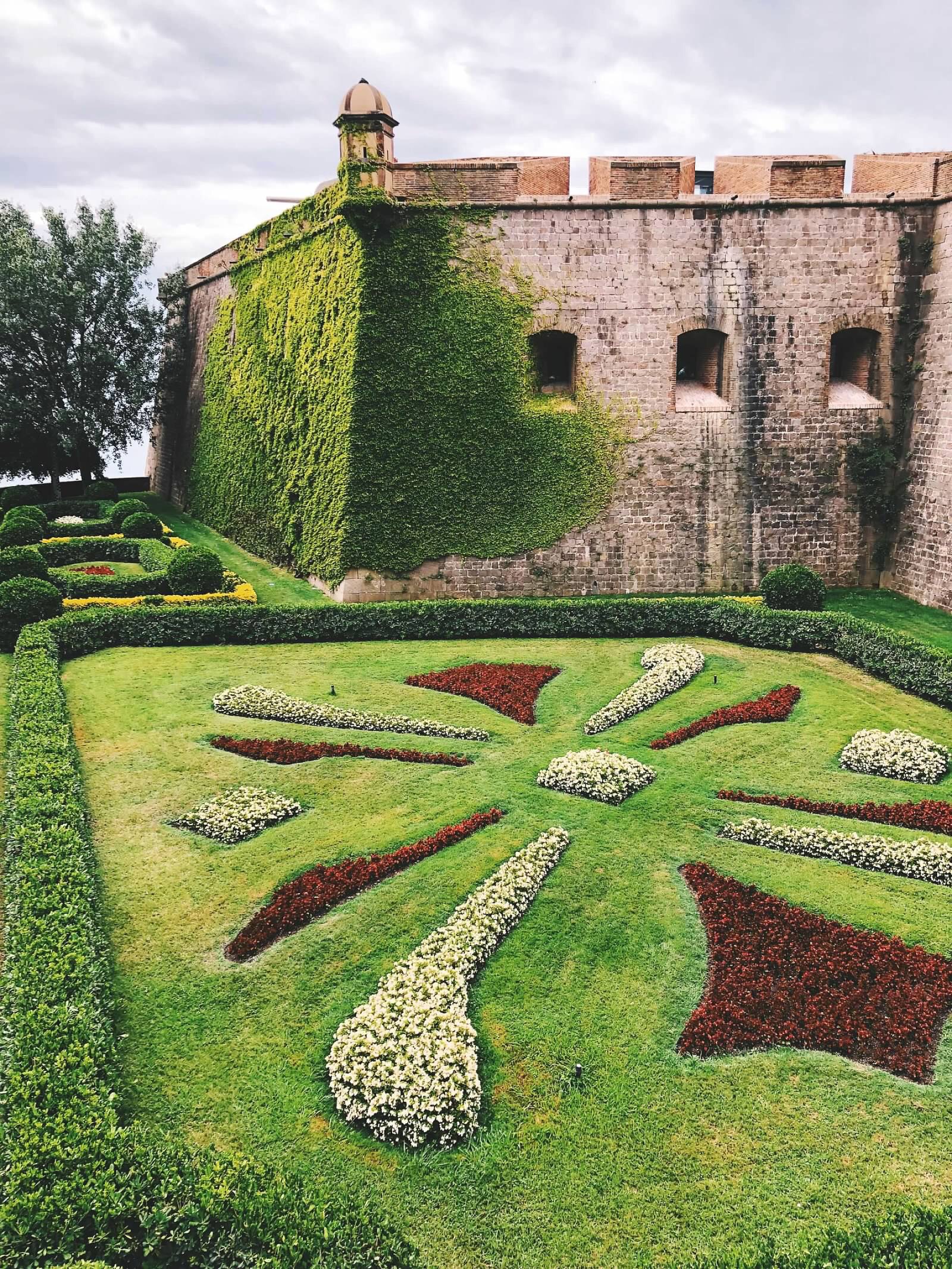
01 · Before you begin
Tickets and opening times for Montjuïc Castle
Montjuïc Castle lists standard admission at €12 and reduced admission at €8 in the municipal directory. Entry is free on Sundays from 3pm and throughout the first Sunday of each month. Check the current conditions and distinguish admission to the grounds from a guided activity and the transport you will use to reach the top of the hill.
How to get to Montjuïc Castle
Reach Montjuïc Castle on bus 150 from Plaça d’Espanya or combine the metro, funicular and cable car. The funicular connects Paral·lel with Parc de Montjuïc and belongs to the integrated fare system. The cable car is a separate service requiring its own ticket. Your best combination depends on budget, mobility and how much walking you want to include.
- Standard and reduced admission
- €12 and €8 in the municipal listing checked.
- Free admission
- Sundays after 3pm and all day on the first Sunday of each month.
- Address
- Carretera de Montjuïc, 66.
- Urban transport
- Bus 150; funicular from Paral·lel with an onward connection.
- Seasons
- March–October 10am–8pm; November–February 10am–6pm.
Reading the defensive architecture and landscape
The fortress originated in 1640, when a small fort was built around a watchtower during the Reapers’ War. Much of its current appearance comes from eighteenth-century alterations by military engineer Juan Martín Cermeño. Its shape responds to defensive requirements rather than the needs of a residential palace, an important distinction when imagining how the spaces once functioned.
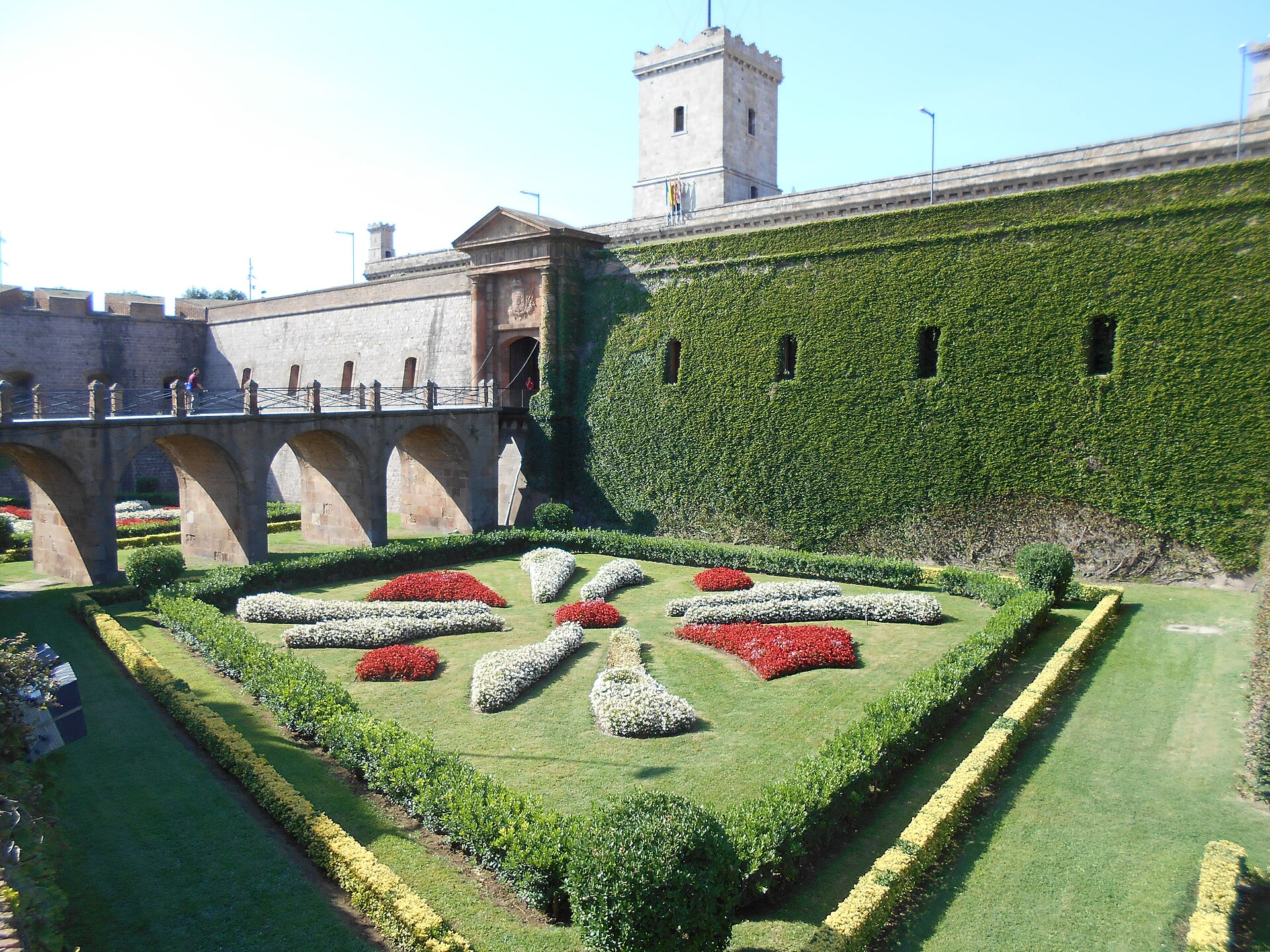
As you approach, notice the relationship between the bridge, moat and entrance. Then explore the permitted routes, comparing walls, bastions and open ground. You do not need specialist military vocabulary to see how angles and distances organise defence. The architecture becomes more understandable when you imagine the areas that could be observed from each position along the route.
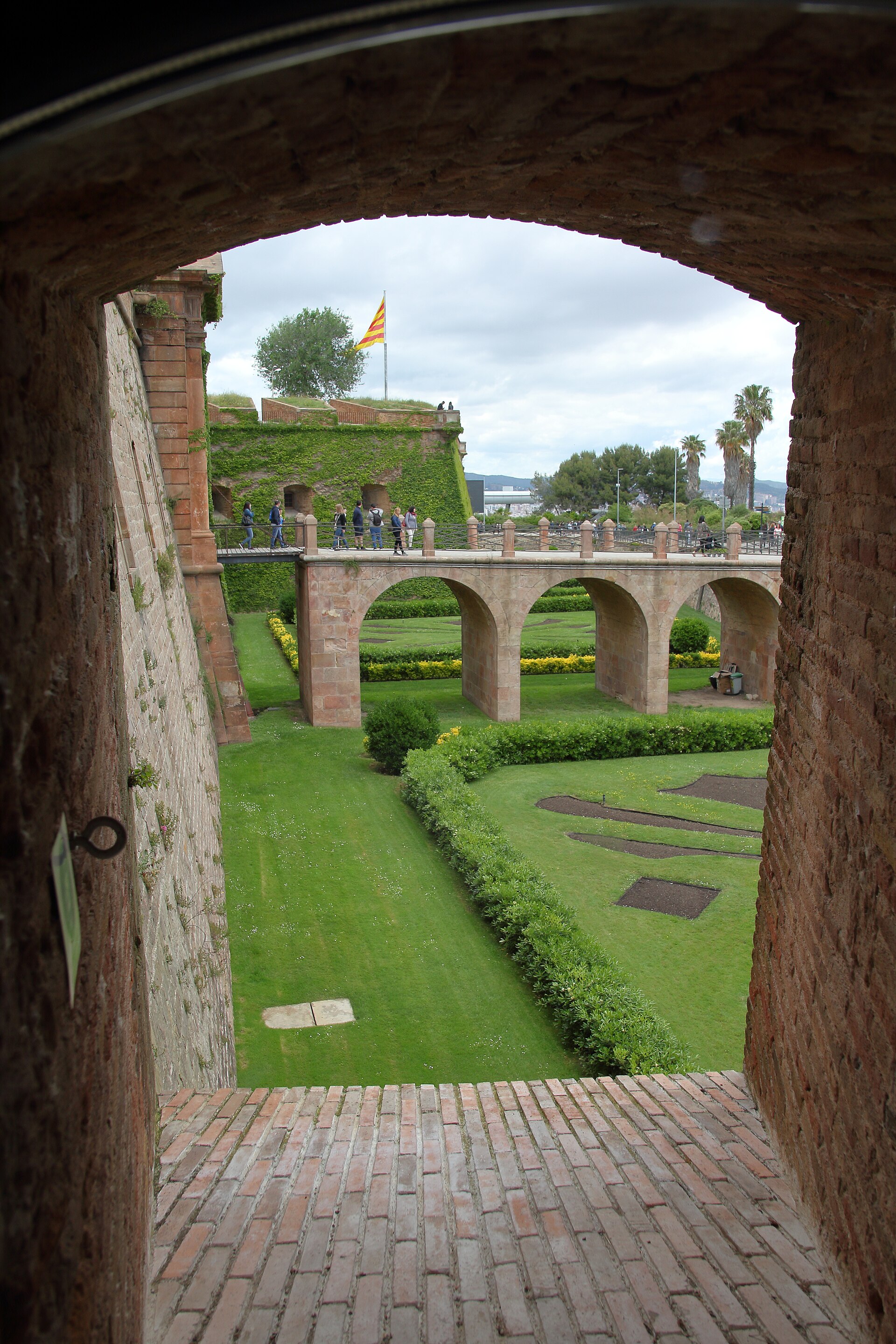
The parade ground provides a useful reference point for finding your way around. Divide your time between exhibitions and outdoor spaces instead of turning the visit into a search for viewpoints alone. In warm weather, alternating indoors and outdoors also supports a comfortable pace and makes it easier to concentrate on historical explanations without rushing past them.
Views towards the harbour reveal another scale of Barcelona, including infrastructure and maritime spaces that appear quite different from the city centre. Spend a few minutes distinguishing the urban areas from port activity before taking photographs. Much of the panorama’s interest comes from connecting its breadth with the strategic location chosen for this particular fortification.
Understanding the memorial history and exhibitions
The relationship with Barcelona was often troubled. The city was bombarded from the hill, and the site served as a military prison. Remembering these uses changes how the walls appear: alongside defence, they represent control over the population below. Connecting the commanding position with this history adds an essential layer to an otherwise purely scenic visit.
One especially significant episode was the execution of Catalan president Lluís Companys on 15 October 1940. Approach his memory respectfully and pay attention to the context of Francoist repression. This history is central to the meaning of the place and deserves time of its own, rather than disappearing behind the attractive panoramas and photographs of the surrounding city.
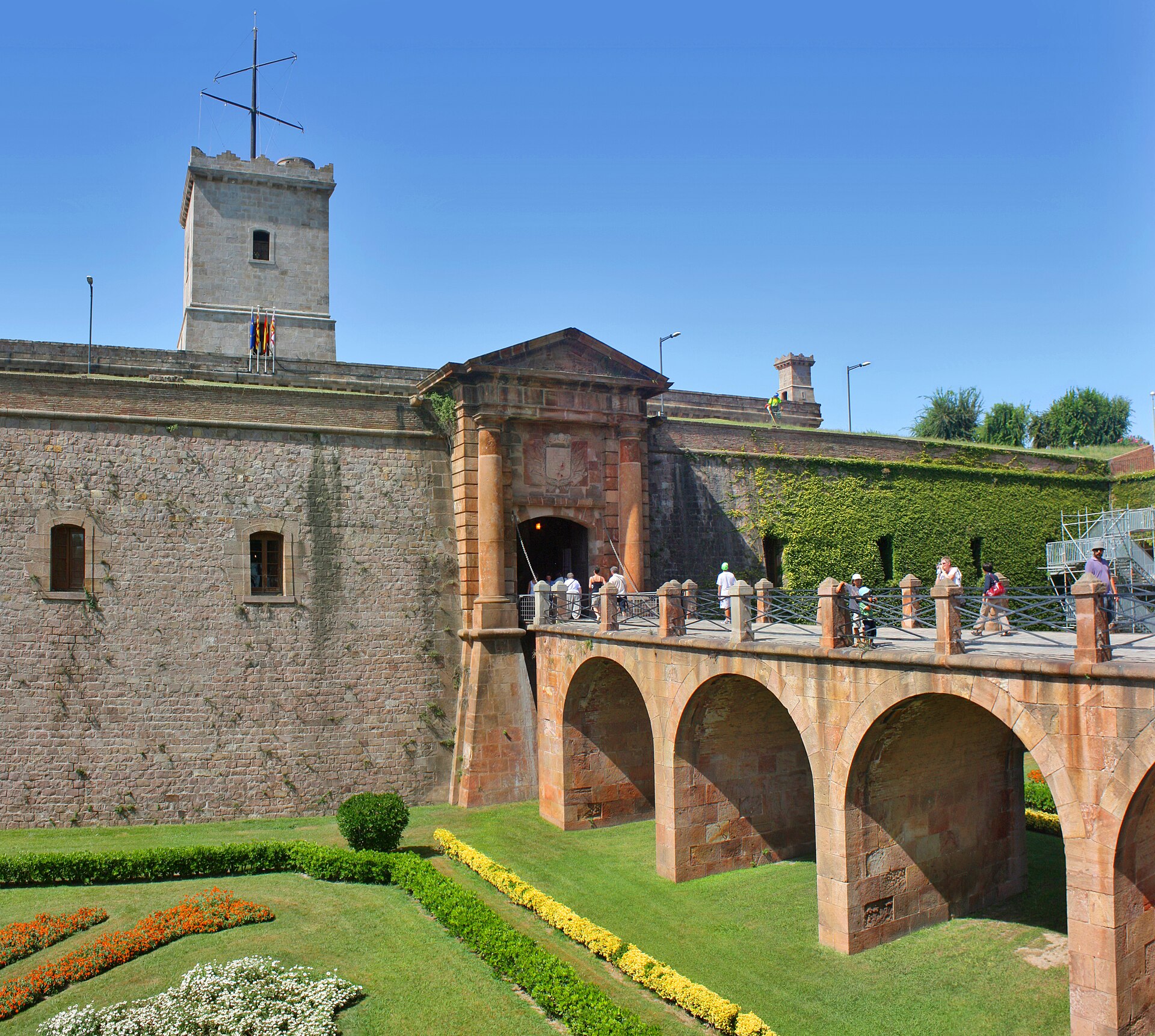
The complex became municipal property in 2007. Today it functions as a cultural and memorial site, with an interpretation centre exploring its development and relationship with Barcelona. Do not expect the present visit to be simply a former collection of weapons. Check the exhibition programme to understand which subjects and displays will be available during your stay.
Municipal guided visits last approximately an hour and require a reservation. They can be particularly useful if you are interested in military architecture or want help following a complicated history beyond the exhibition panels. Check the language, schedule and price through the official channel. Free admission to the grounds does not automatically make every guided activity free.
Planning transport and a day on the hill
The municipal directory lists opening from 10am to 8pm between March and October and from 10am to 6pm between November and February. Exhibitions finish half an hour before the grounds close. Check notices for your date and arrive with enough time; reaching the entrance late in the afternoon limits the opportunity to understand the historical material properly.
Do not confuse the funicular with the cable car. The first connects with metro lines L2 and L3 at Paral·lel and ends at Parc de Montjuïc, below the fortress. From there, continue by panoramic cabin or plan another connection. Check operating times and service status for both directions, particularly when your return journey will be close to closing time.
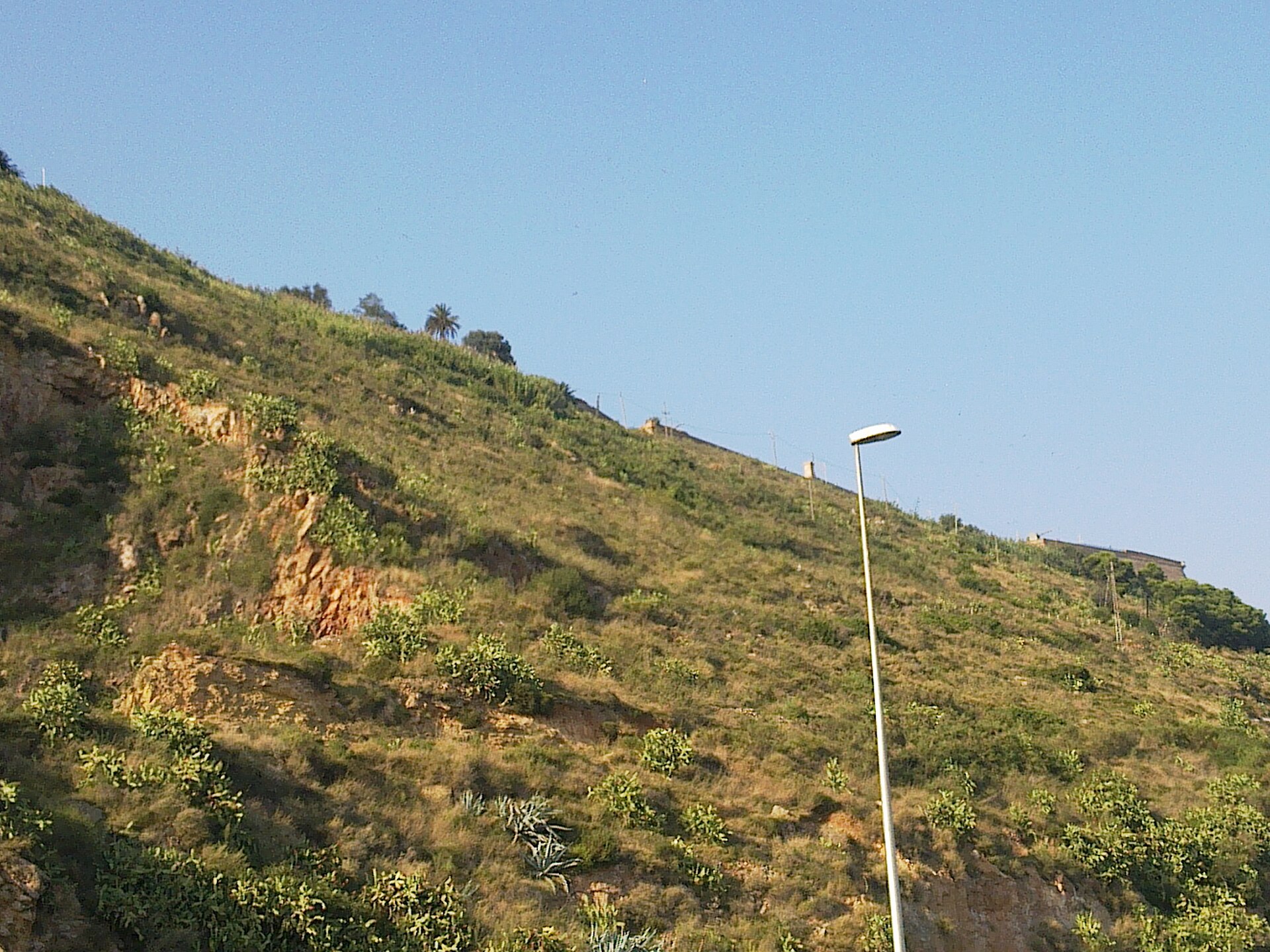
The cable-car operator states that its facilities are adapted for reduced mobility. Still, confirm the route between the stop and the entrance, together with conditions in the spaces you intend to visit. On a hill, gradients and distances matter as much as the vehicle itself. Plan around the actual requirements of your group rather than relying on a general label.
For a direct urban-transport approach, consult the route and stops of bus 150. If you enjoy walking, taking transport uphill and choosing a suitable downhill walking route can be an appealing combination. Bring water, sun protection and comfortable footwear. Do not assume that every path across the mountain has continuous shade or that all routes require the same effort.
Extend the day with gardens, the Olympic area or the Fundació Joan Miró, choosing a few stops instead of rushing between many destinations. As a practical recommendation, allow around two hours for the grounds and add travel time separately. When booking a private outing, confirm the meeting point and whether transport, admission or exterior interpretation are included.
Sources and visitor information
Check the official conditions and notices before booking or travelling.
Photograph authors and licences
- A view of Montjuïc fortress. · Castle of Montjüic.jpg · Julianibarra · Original source · CC0.
- The defensive architecture at the summit. · Montjuïc Castell.JPG · Canaan · Original source · CC BY-SA 4.0.
- The garden framed by a castle window. · Castell de Montjuïc window.jpg · Lahi · Original source · CC BY-SA 4.0.
- The entrance to the old fortress. · Castell de Montjuic. Barcelona.jpg · Oleg Khalimov · Original source · CC BY-SA 3.0.
- Walls and spaces within the fortifications. · Castell de Montjuïc-1.jpg · Deosringas · Original source · CC BY-SA 3.0.
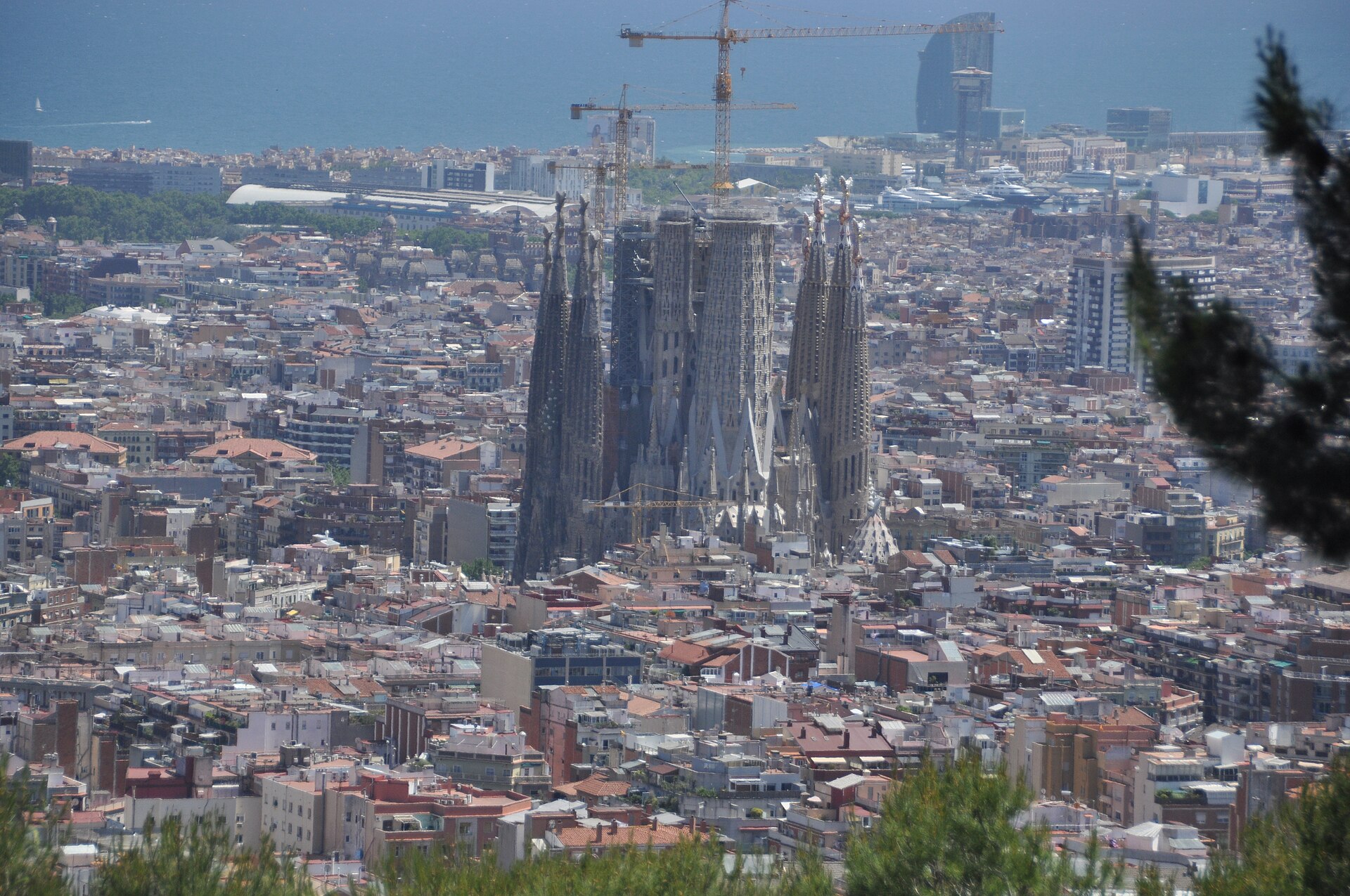
- The basilica skyline in 2019. · Sagrada familia BCN 01.jpg · Felvalen · Original source · CC BY-SA 4.0.
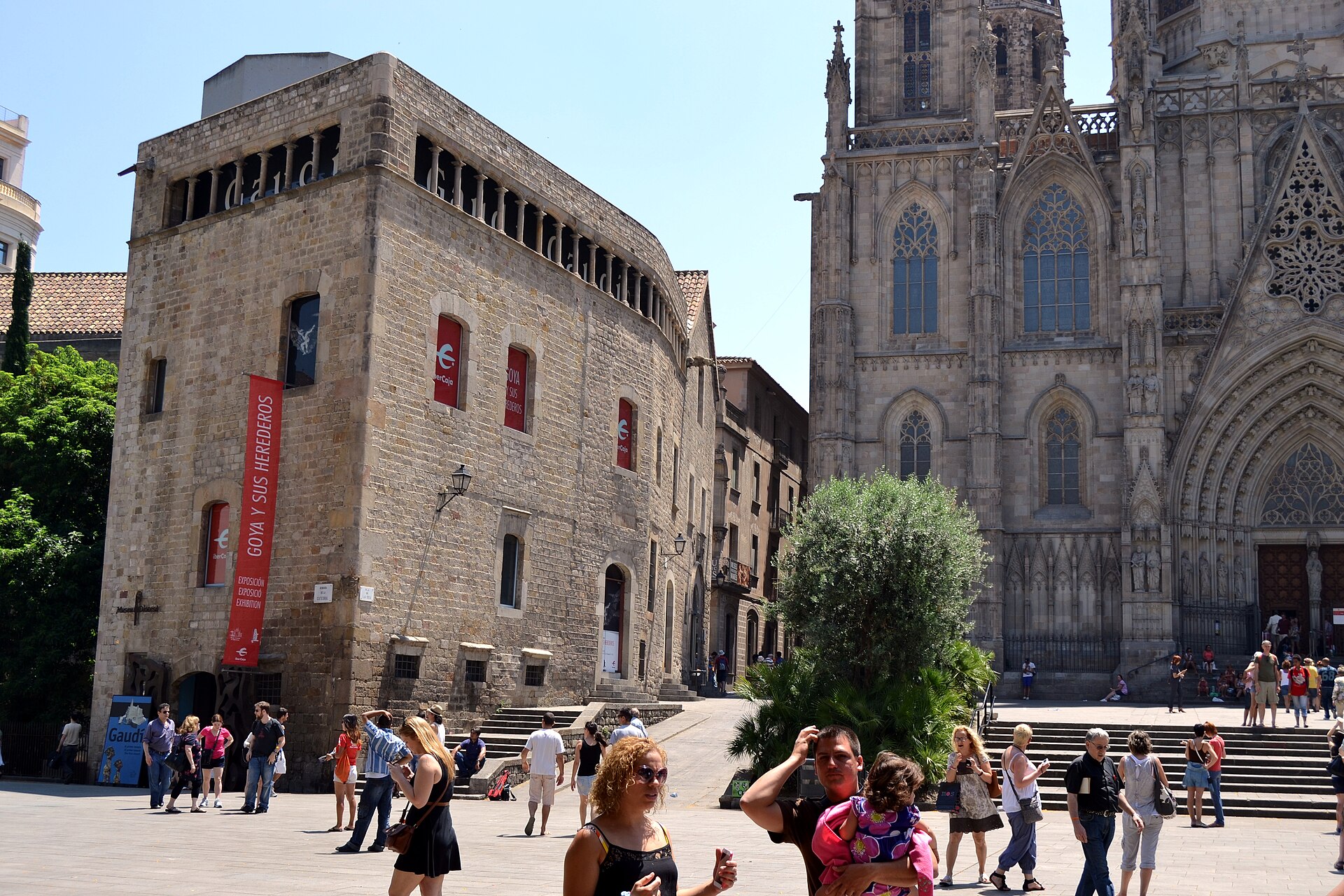
- Gothic architecture in the heart of the old town. · Catedral de Barcelona (9248851592).jpg · Emilio J. Rodríguez Posada · Original source · CC BY-SA 2.0.


Images are resized and cropped for this page. Adaptations of CC BY-SA photographs are shared under the same licence indicated for each image.
Keep exploring
Another perspective on the city