Living history in the Gothic Quarter
Barcelona Cathedral
Barcelona Cathedral opens a window onto the history of the Gothic Quarter. Its façade, chapels, cloister and rooftop terraces bring different periods together within a single complex. To enjoy the experience, distinguish cultural visiting hours from worship arrangements and arrive with a clear idea of the spaces you would most like to explore at a comfortable pace.
Plan your visit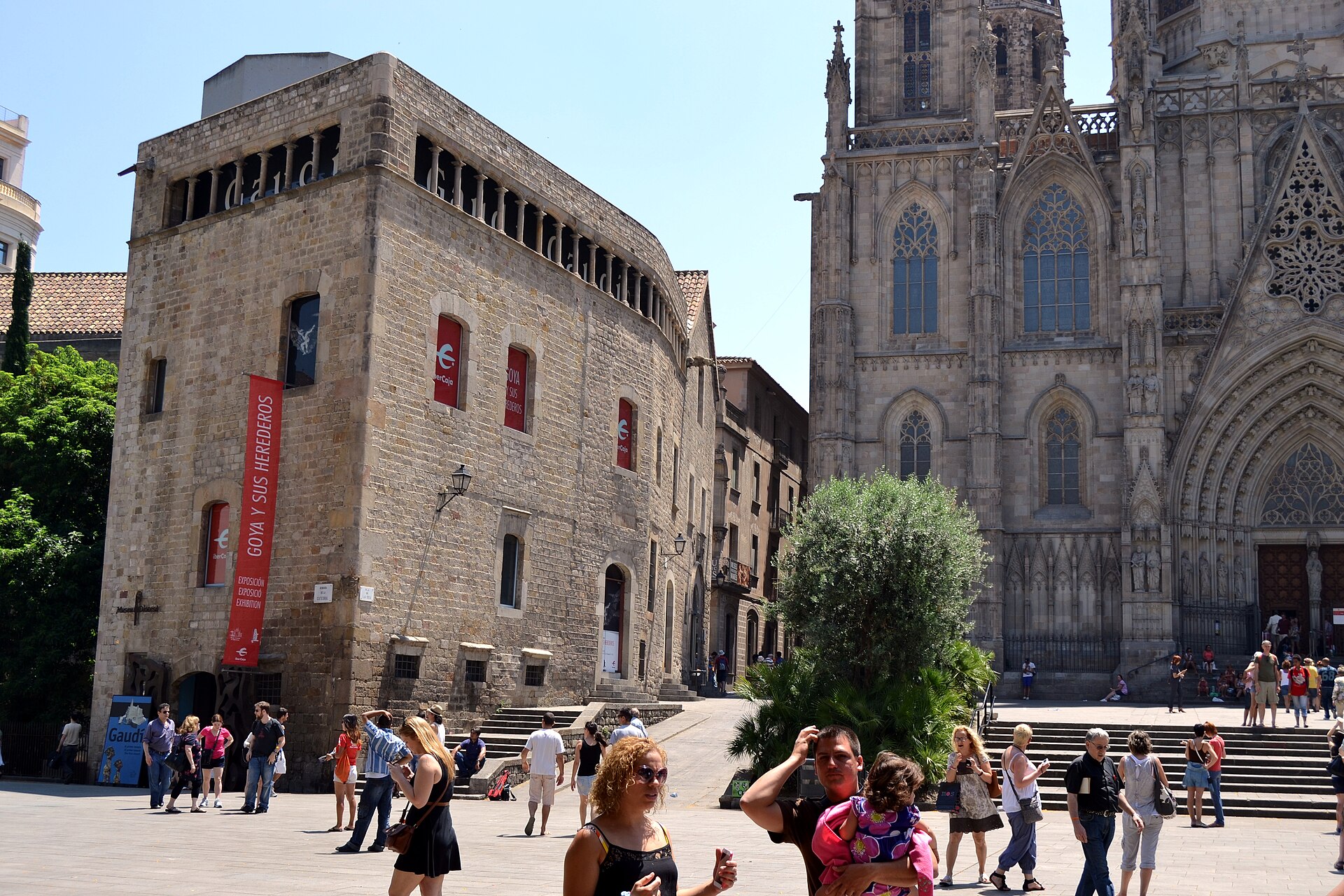
01 · Before you begin
Booking tickets for Barcelona Cathedral
Barcelona Cathedral publishes an individual tourist admission price of €16. Buy through its official website and check which spaces are available on your chosen date. Cultural visiting hours differ between weekdays, Saturdays and Sundays. Religious celebrations can affect the route, so the arrangements for the actual day should take priority over any itinerary prepared before your arrival.
What to see at Barcelona Cathedral
Barcelona Cathedral is dedicated to the Holy Cross and Saint Eulalia. The visit brings together Gothic architecture, an elaborate choir, a cloister with thirteen geese and viewpoints over the old town. It should not be confused with Gaudí’s basilica in the Eixample. Here, the appeal lies in discovering how centuries of urban history overlap within a living religious building.
- Individual admission
- €16 in the official tariff checked.
- Address
- Pla de la Seu s/n, Gothic Quarter.
- Accessible entrance
- Santa Eulàlia doorway on Carrer del Bisbe.
- Sundays and religious holidays
- Tourist visits 2pm–5pm; last admission 4.30pm.
- Visit enquiries
- reserves@catedralbcn.org · +34 933 152 213.
Understanding the church from façade to choir
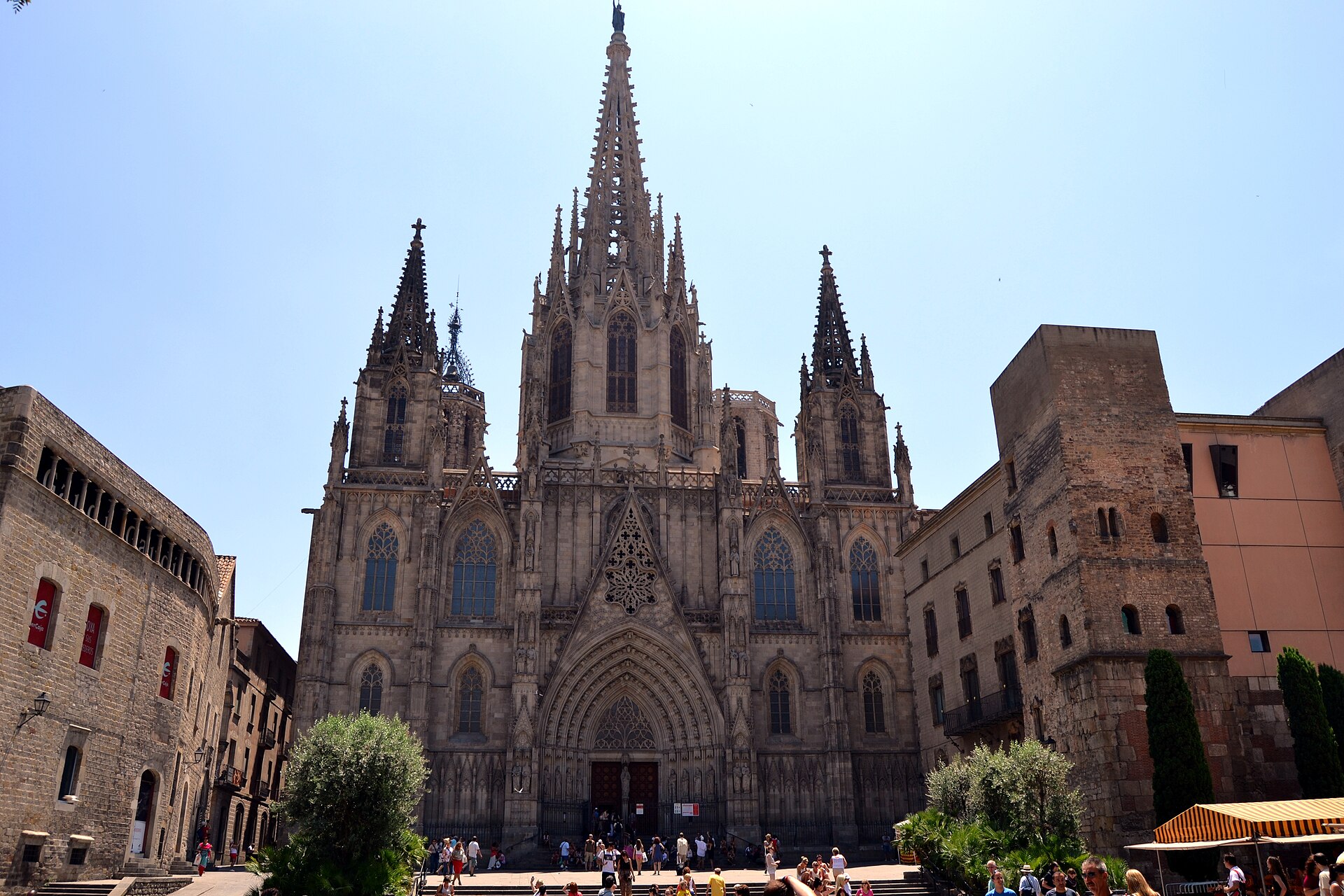
Work on the Gothic building began in 1298 and was largely completed by the middle of the fifteenth century. Its present exterior includes later additions: the façade dates from the late nineteenth century, while the central spire was finished in 1913. These different dates make a first stop outside the main entrance a useful introduction to architectural history.
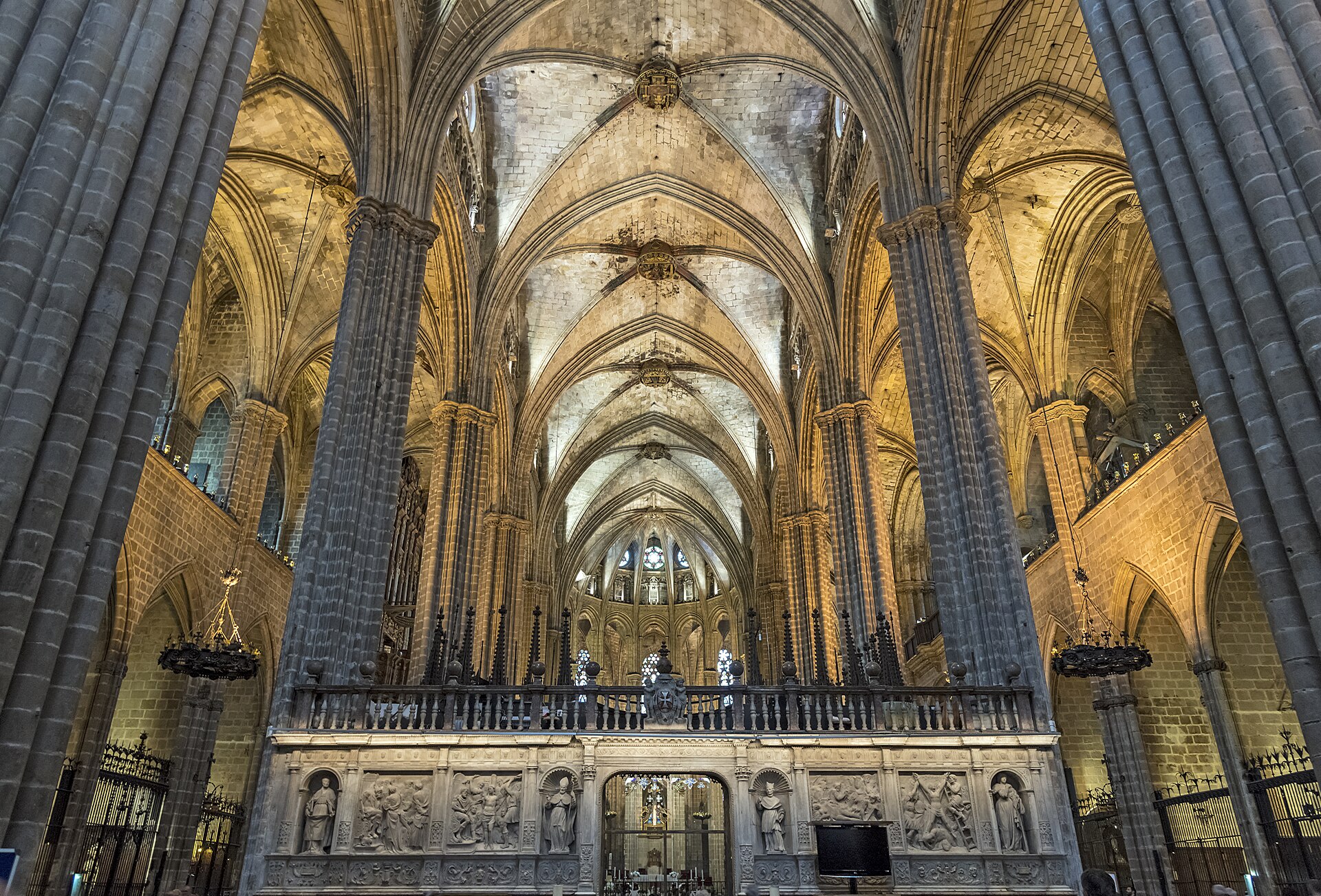
The church has three naves, side chapels and an ambulatory around the east end. Follow the marked route and allow yourself moments to look upwards. Vault bosses and stained glass offer details easily missed when walking straight ahead. Alternating views along the central axis with those from the sides gives a more complete understanding of the space.
The choir stalls combine Gothic carving with heraldic shields linked to the Knights of the Golden Fleece, who met in the city in 1519. Concentrate on the relationship between wood, relief and colour. Individual details repay closer attention; a single wide photograph can flatten the carving and conceal the differences between the many elements of the ensemble.
The patron saint’s crypt contains her tomb and remains central to the religious identity of the church. Approaching it respectfully helps explain why this is still a place of devotion. When an area is reserved for prayer or unavailable during a service, adapt the order of your visit and continue through the spaces that are open.
Exploring the cloister and the rooftop views
The cloister introduces a different scale and quality of light from the interior. Walk around its galleries slowly and look at the chapels before concentrating on the central garden. The combination of plants, water and stone invites a visual pause. It also reveals a space with its own character, extending well beyond the familiar image of its resident birds.
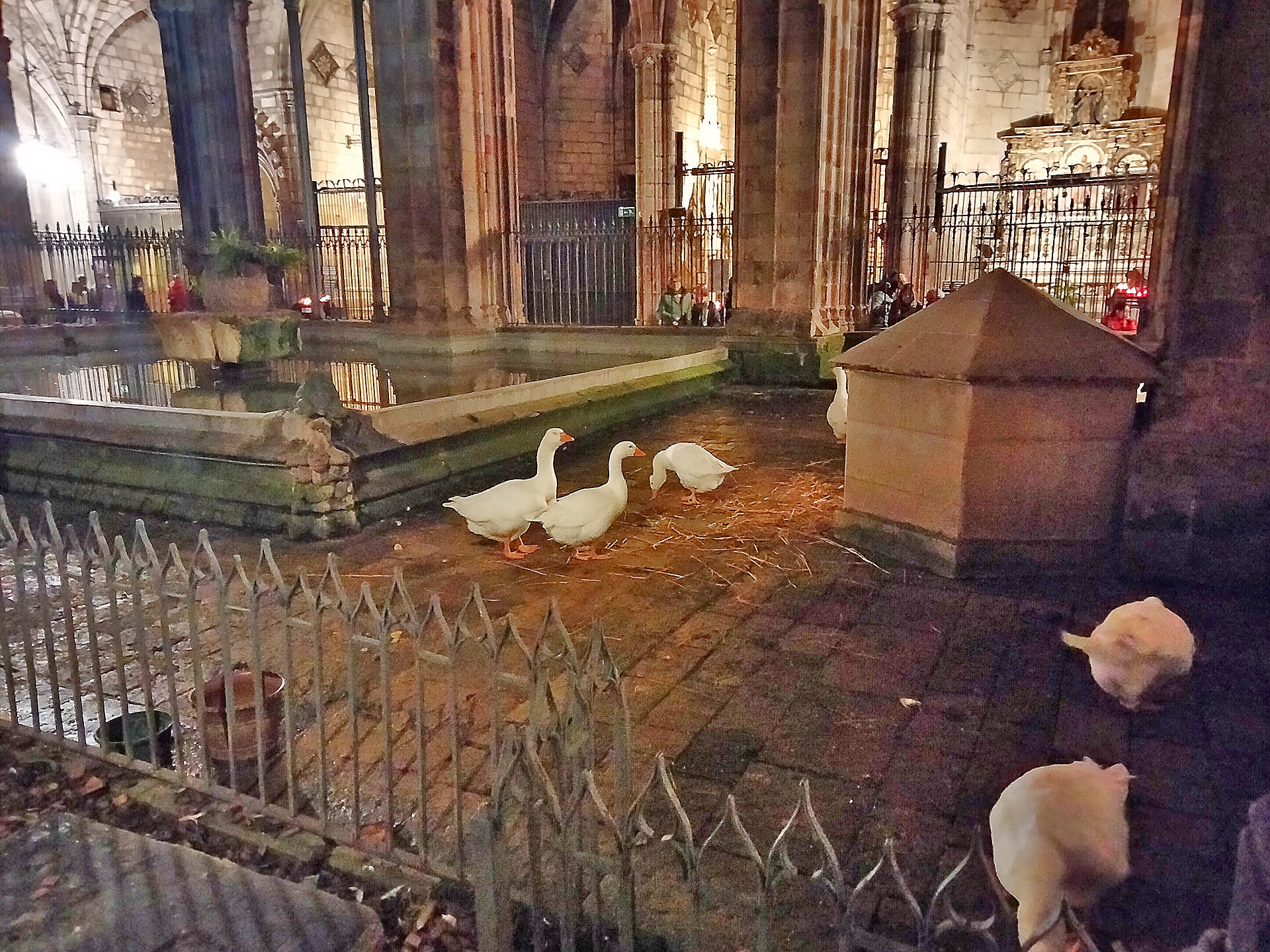
According to tradition, the thirteen geese represent Saint Eulalia’s age when she was martyred. Identifying this as tradition keeps religious storytelling distinct from historical research. With children, watching the birds provides an approachable starting point for discussing the surroundings. Keep a respectful distance and follow the venue’s instructions rather than treating the cloister as a place to feed wildlife.
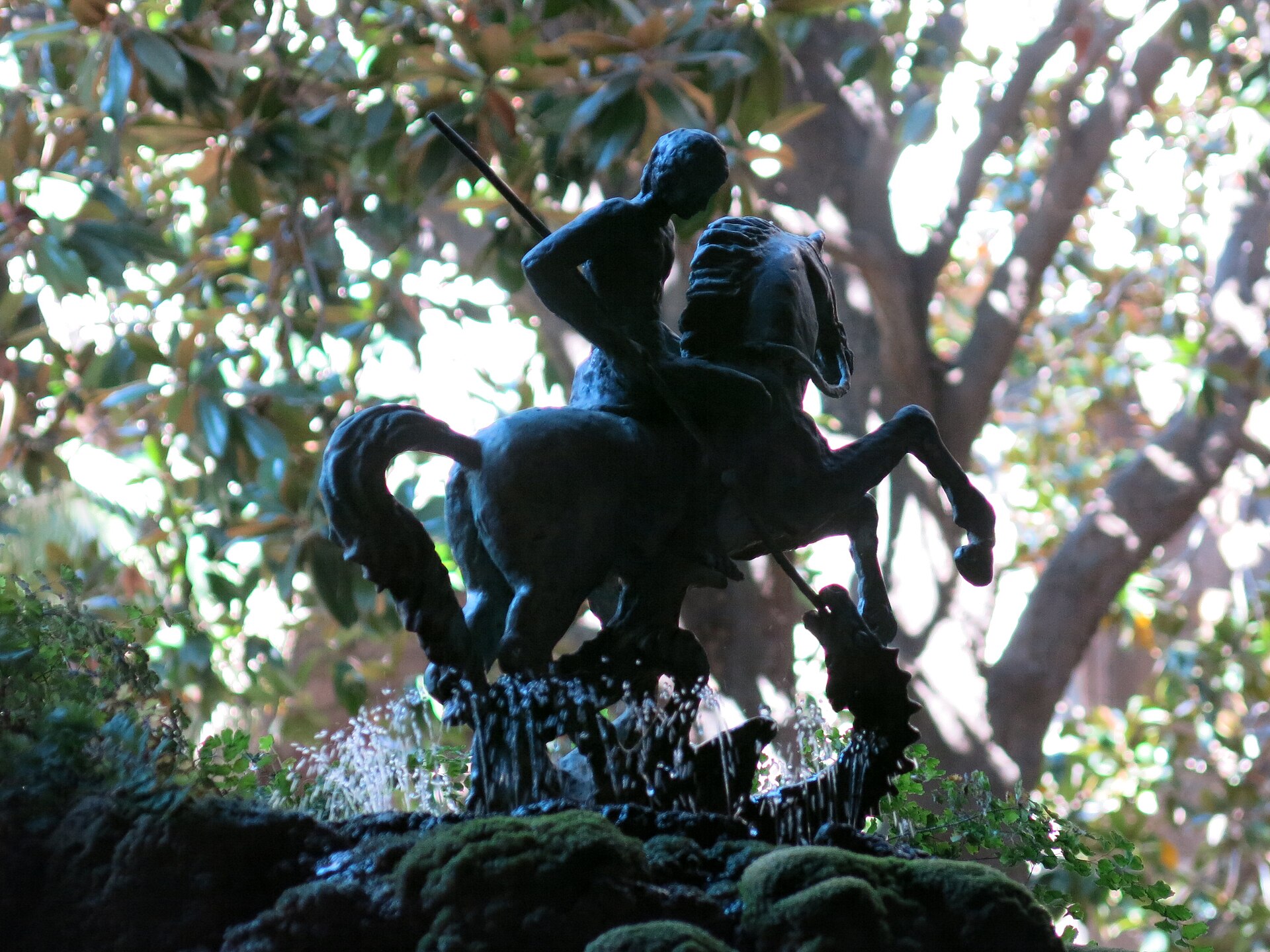
At Corpus Christi, the fountain is associated with l’ou com balla, the custom of an egg appearing to dance on a jet of water. At other times, the fountain still helps explain the site’s role in the city’s festive calendar. Check the specific celebration dates if you want to see the activity; it is not a permanent year-round display.
The roof terraces reveal bell towers, pinnacles and views across the old town. The institution describes access by lift from the Chapel of the Holy Innocents. If you have mobility requirements, confirm the entire route beforehand. The presence of a lift does not necessarily mean that every surface or additional section above will suit every visitor’s circumstances.
Planning your time and an old-town walk
Published tourist hours are 9.30am to 6.30pm on weekdays, 9.30am to 5.15pm on Saturdays and the eves of religious holidays, and 2pm to 5pm on Sundays and religious holidays. Last admission is earlier than closing. Recheck the official calendar before visiting, particularly around significant celebrations, public holidays or a long weekend when your itinerary may need adjustment.
As a planning suggestion, allow around an hour and a half for the church, extending your visit according to the spaces you choose. This is a practical allowance rather than an imposed duration. If sculpture or photography is a particular interest, reduce the number of other stops and give yourself longer to examine the features that matter most.
The main entrance is on Pla de la Seu. Visitors with reduced mobility should use the Santa Eulàlia doorway on Carrer del Bisbe. Save this reference before setting out, since searching for a different entrance can add unnecessary distance. For specific needs, contact the official tourist-visit team and describe the assistance or route information that would help you.
The surrounding quarter rewards exploration on foot. Combine the monument with Plaça de Sant Jaume and nearby Gothic Quarter streets without filling every hour with another timed interior visit. Wear comfortable shoes and use a map to choose a broad sequence, while allowing small detours. The changing views through narrow streets and open squares are part of the historical experience.
Remember that cultural visits take place alongside worship. Keep conversation discreet, respect prayer areas and follow the instructions on photography. If you are attending a service, use its particular entrance arrangements and timetable. A slower approach lets you appreciate the artworks while recognising the continuing religious purpose that connects the present-day building with its long history.
Sources and visitor information
Check the official conditions and notices before booking or travelling.
Photograph authors and licences
- Gothic architecture in the heart of the old town. · Catedral de Barcelona (9248851592).jpg · Emilio J. Rodríguez Posada · Original source · CC BY-SA 2.0.
- The geese that live in the cloister. · 202 Catedral de Barcelona, les oques del claustre.jpg · Enric · Original source · CC BY-SA 4.0.
- Details of the Cathedral of the Holy Cross and Saint Eulalia. · Catedral de Barcelona (9248804702).jpg · Emilio J. Rodríguez Posada · Original source · CC BY-SA 2.0.
- Saint George and the dragon on the cloister fountain. · 112 Catedral de Barcelona, font del claustre, Sant Jordi matant el drac.jpg · Enric · Original source · CC BY-SA 4.0.
- The vaults and choir inside the cathedral. · Barcelona Cathedral Interior - Ceiling and choir.jpg · Didier Descouens · Original source · CC BY-SA 4.0.
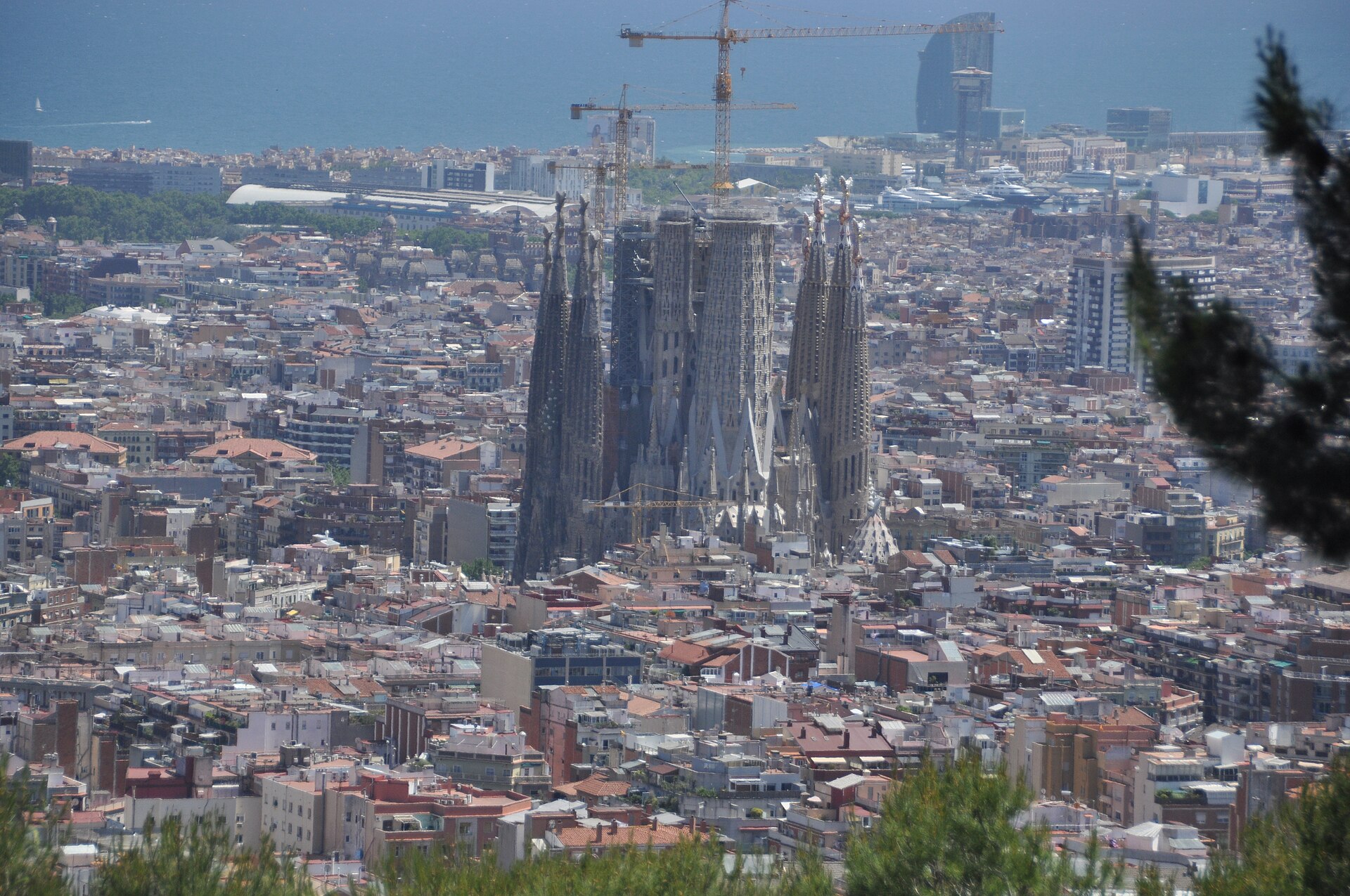
- The basilica skyline in 2019. · Sagrada familia BCN 01.jpg · Felvalen · Original source · CC BY-SA 4.0.
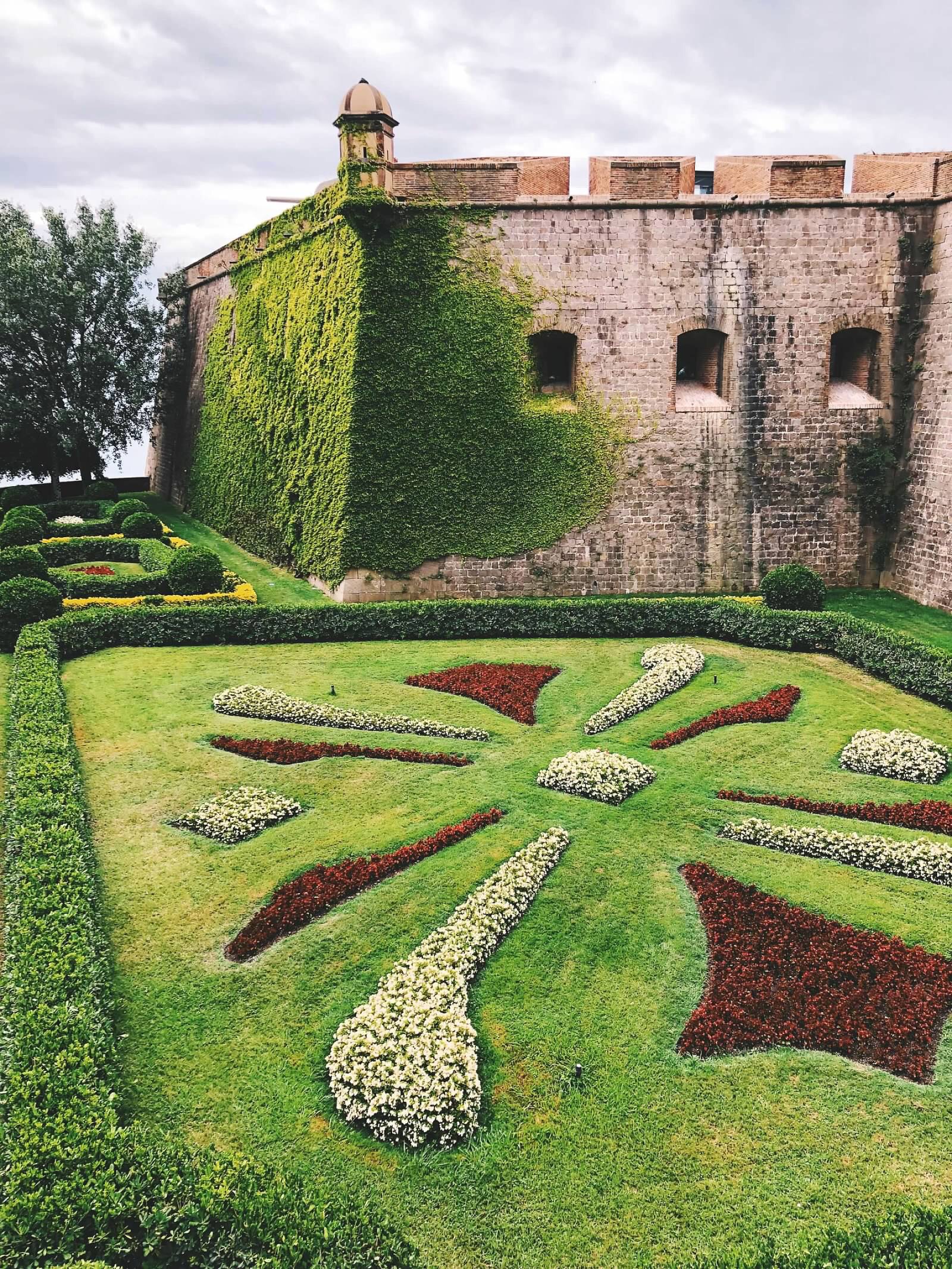
- A view of Montjuïc fortress. · Castle of Montjüic.jpg · Julianibarra · Original source · CC0.


Images are resized and cropped for this page. Adaptations of CC BY-SA photographs are shared under the same licence indicated for each image.
Keep exploring
Another perspective on the city